In the northern reaches of Namibia, there was a young man named Elao Benjamin Martin. Born in the humble village of Anamulenge, his world was transformed the moment he set foot in Windhoek, the bustling city where his academic journey began. Elao was mesmerized by the contrast between rural vernacular and urban architecture, igniting a passion for design that would define his future.
Elao’s dedication and hard work earned him an undergraduate degree in architecture from the esteemed Namibia University of Science and Technology (NUST). The adventure continued as he pursued his Master’s at the University of Johannesburg’s Graduate School of Architecture in South Africa. Accomplishments and accolades followed: In 2017, Elao was recognized as an ‘Emerging Voice’ in African Architecture at the inaugural Africa Architecture Awards held in Cape Town. Adding to his success, he won both the 2016 Des Baker Award and the 2019 Corobrik Award at the University of Johannesburg.
With an invitation extended to just ten scholars worldwide, Elao attended the prestigious 2021 Norman Foster Foundation’s Rematerializing Housing Workshop in Madrid, Spain. Now reunited with NUST as a Staff Development Fellow under the University’s Graduate Talent Acceleration Programme, he diligently pursues his PhD in their Architecture department. Elao’s ongoing research delves into local spatial practices and urban development at the intersection of urban and communal land in Northern Namibia—a fitting tribute to his roots.
From a small village boy to a recognized name in architecture, Elao’s journey is an inspiring story of passion and dedication.
The story of Kitintales landscape through clay brick making
Project Location: Kintintale, Kampala, Uganda
Year : 2018
University : University of Johannesburg(GSA), South Africa
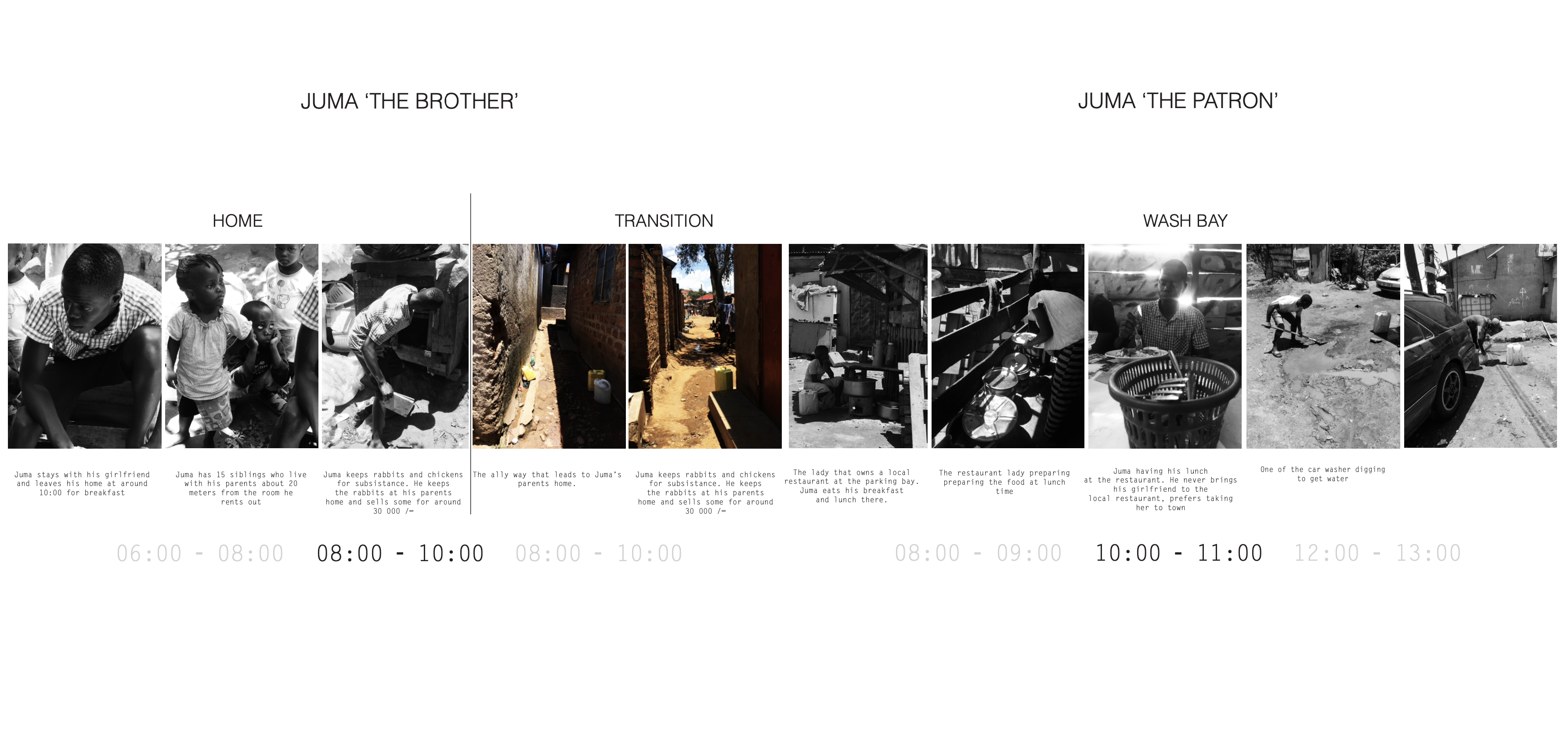
In the first year, Unit 17 focused on materials, which led to the exploration of “clay making as a tool to reimagine the landscape” in the second year in Unit 15. The story unfolds in Kintintale, an informal settlement in Kampala, Uganda. Elao, accompanied by a local guide, explored Kintintale and discovered brick kilns that sparked excitement.
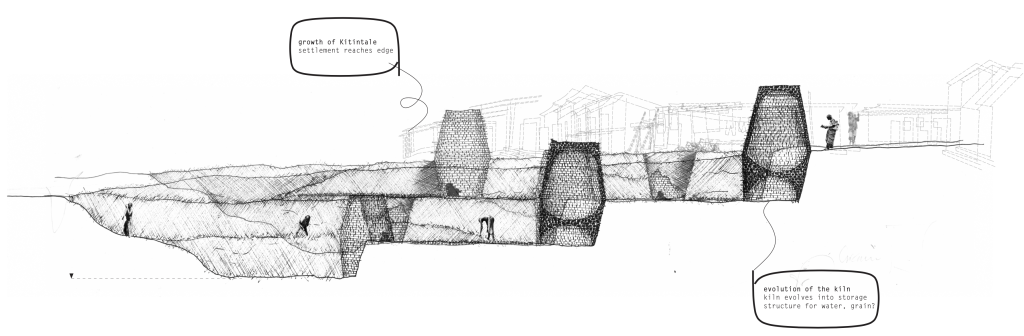
The project’s site is a valley/wetland where land prices vary. Higher grounds offer more expensive land, while the lower areas are cheaper and prone to flooding. Consequently, informal settlements grow at the bottom of the hill, causing ecosystem disruptions and affecting water filtration flowing into Lake Victoria.
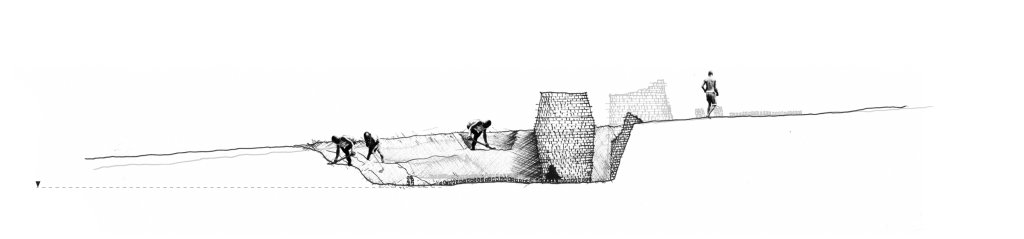
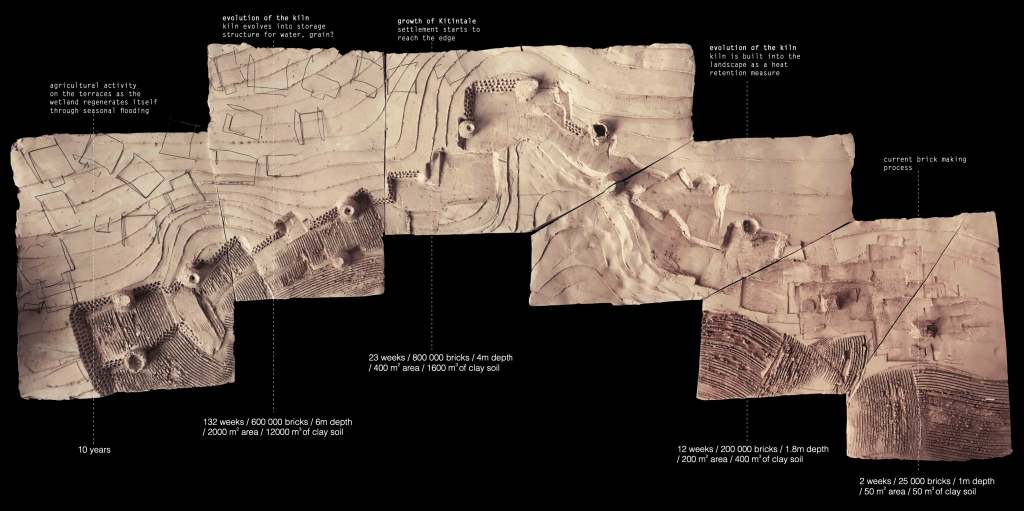
Elao sought solutions to these challenges by investigating brick making. He aimed to find hidden potentials that could benefit both the wetland and informal settlement communities. The design featured an edge created by removing clay as a barrier between the settlement and wetlands, with solutions that allowed densification instead of sprawling into wetland areas.
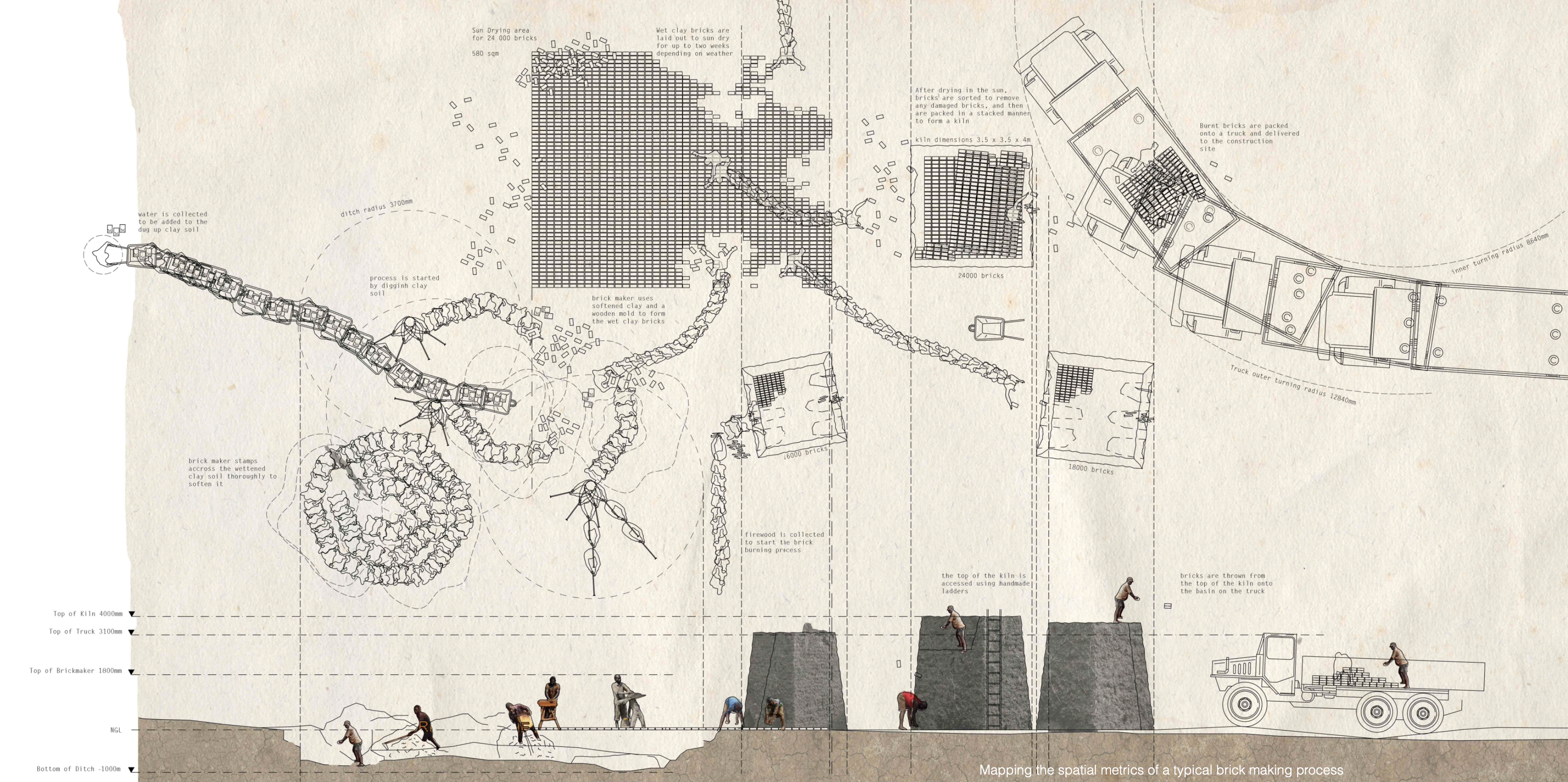
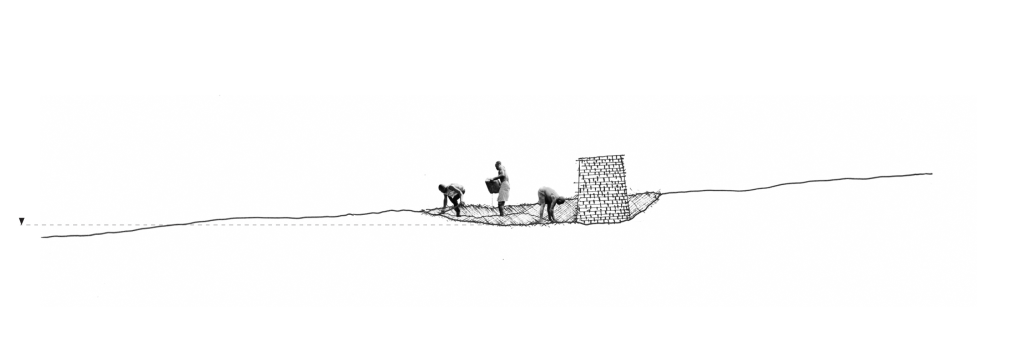
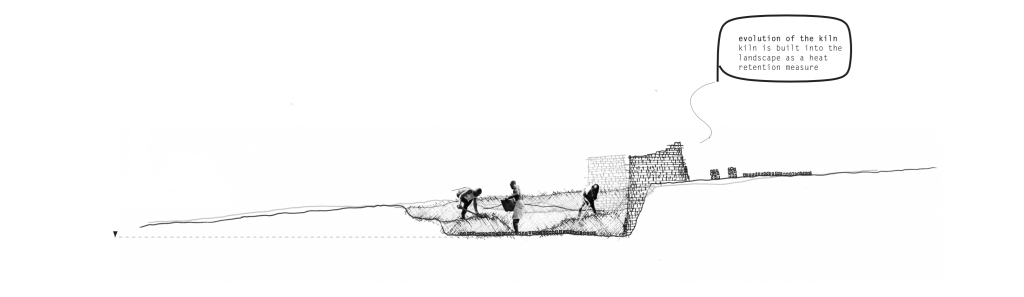
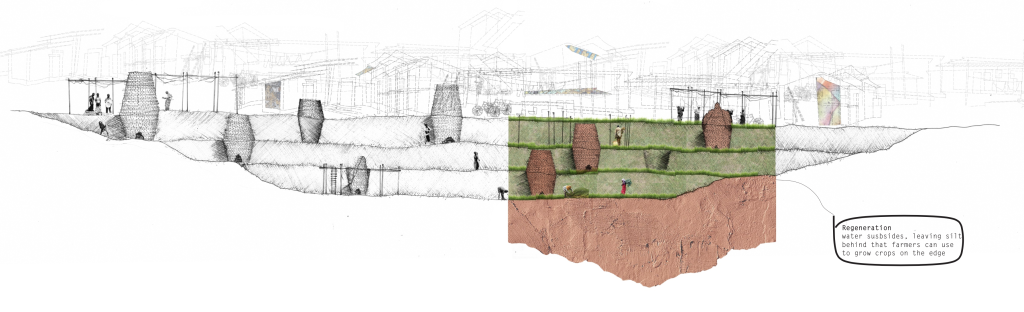
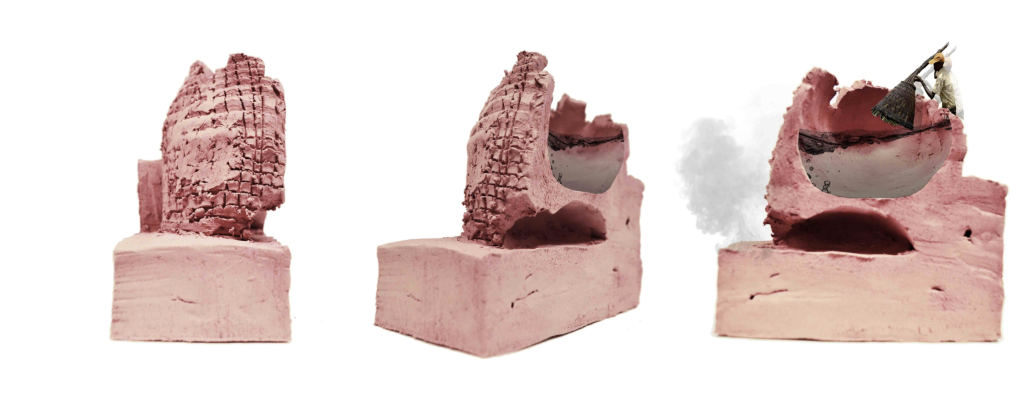
Studying brick making revealed that excavating clay created an edge that led to various landscape levels. The process involved mining 1m-deep clay deposits and repurposing waste bricks––about 30% of production––despite imperfections. The community could then build alternative kilns for melting waste plastics into building components or plates and use them for storage or pottery curing. These activities would generate additional income for the community members while transforming spaces into activity hubs.
Over time, aged kilns could serve as fish harvesting ponds due to their volumetric qualities. Seasonal changes allowed landscape healing, eventually resulting in a stepped topography that evolved into an agricultural setting benefitting the community. This forward-thinking project addressed not only current issues but also anticipated future solutions for both environmental and human well-being.
Lorem ipsum dolor sit amet, consectetur adipiscing elit. Ut elit tellus, luctus nec ullamcorper mattis, pulvinar dapibus leo.