
By Mbatata Uremena
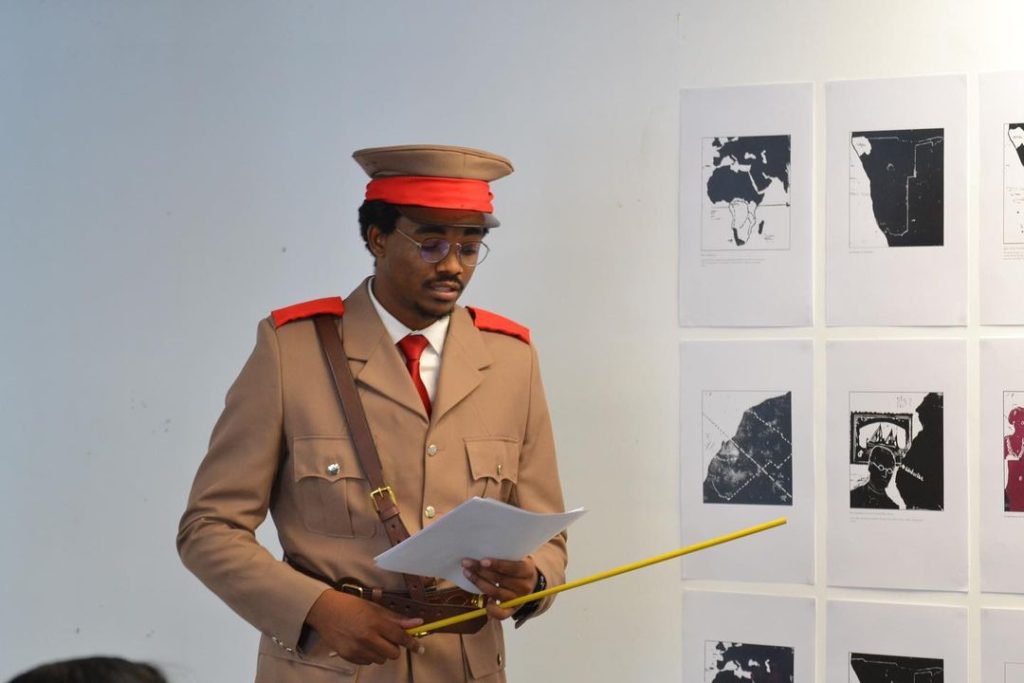
Who is Mbatata?
During his high school years, a young man dreamed of becoming an engineer. He even landed a job shadowing opportunity at Ingenium Consulting Engineers (later absorbed by EMCON). While working on a project in collaboration with Marley Tjitjo Architects, he found himself more captivated by the architectural work than the engineering tasks. This realization led him to pursue architecture as his chosen career path the following year. Recognizing his potential, the firm awarded him a full scholarship for his studies.
As he began architecture school at the Namibia University of Science and Technology (NUST), he felt unsure of what to expect but found support in comradery with his classmates. Mbatata recalls his first year design lecturer, Philip Lühl, teaching them of the social responsibilities of design and how design encompasses community, atmosphere, and the in-between engagements; transforming ideas into realities became a new passion.
His first year truly altered his way of thinking – from examining space through handwork with sticks, to scaling it 1:1, then experimenting with modular clay work, and finally exploring robust forms. A university trip to Ombaka in northern Namibia offered further enlightenment. Home to the Ovahimba people and their unique vernacular construction techniques, this experience helped him understand how different elements contribute to structure and space utilization.
As he continued his journey, he developed his own design language which was nurtured during his internship at Marley Tjitjo Architects. In fourth year, he found great enjoyment in studying global south inspirations and perspectives from neighboring countries to address Namibia’s challenges – an approach that emphasized empathy for users of designed spaces.
Motivated by differing perspectives and seeking new learning environments, he worked for a year before deciding to pursue his masters at University of Johannesburg —a university known for its multidisciplinary approach to design. He wholeheartedly embraced their inquisitive nature in exploring students’ unique thesis ideas while refining their own design language and perspective.
The Untold story of Ozombu Zovindimba
Project Location: Ozombu Zovindimba, Namibia
Year : 2022
University : University of Johannesburg(GSA), South Africa
In Unit 15X, in the year 2021, the primary focus was on toxic landscapes and their impact on communities. Johannesburg’s establishment on a mining belt led to the introduction of the Group’s Areas Act of 1950 during the apartheid-era which saw the relocation of black communities closer to mine dumps. These communities were plagued by toxic air, consequently giving rise to specific health issues.
Mbatata designed a recreational park for the community members of Riverlea, a neighborhood in Johannesburg, to share their stories and experiences. The project centered on initiating conversations about the spatial injustices that started during the apartheid era and are still observed today.
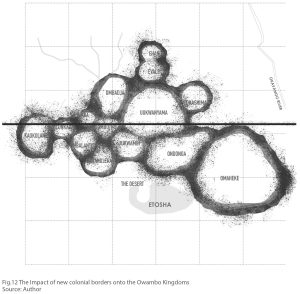
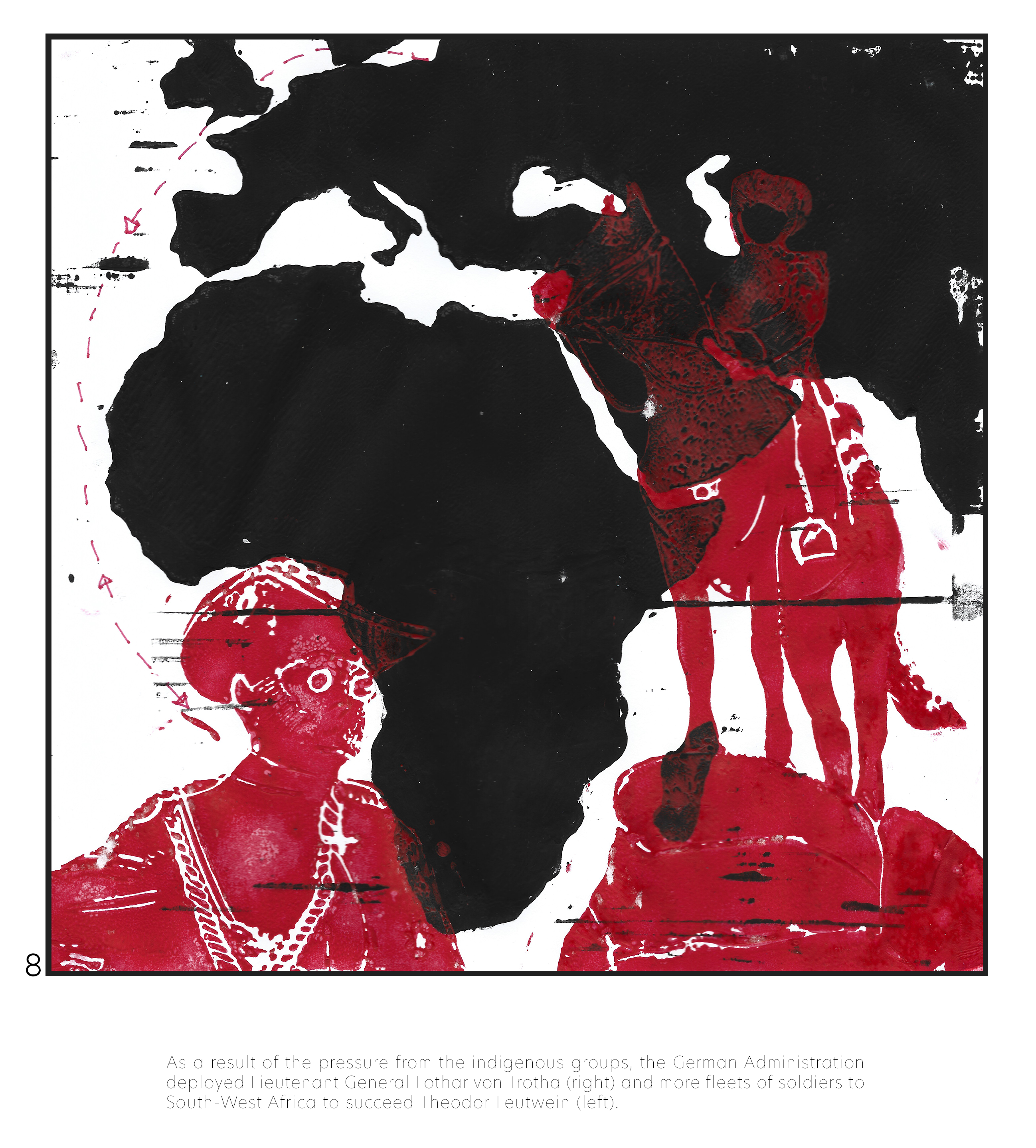
As Mbatata transitioned into the second year of Unit 15X, he became increasingly enamored by South Africans’ cultural pride, which reminded him of his own Herero people’s pride. This inspired him to delve deeper into his own history and develop a personal attachment to his thesis. Living close to a sacred site significant to his people, Mbatata found himself drawn towards uncovering the truth about the OvaHerero genocide, which wiped out around 80 percent of the population.
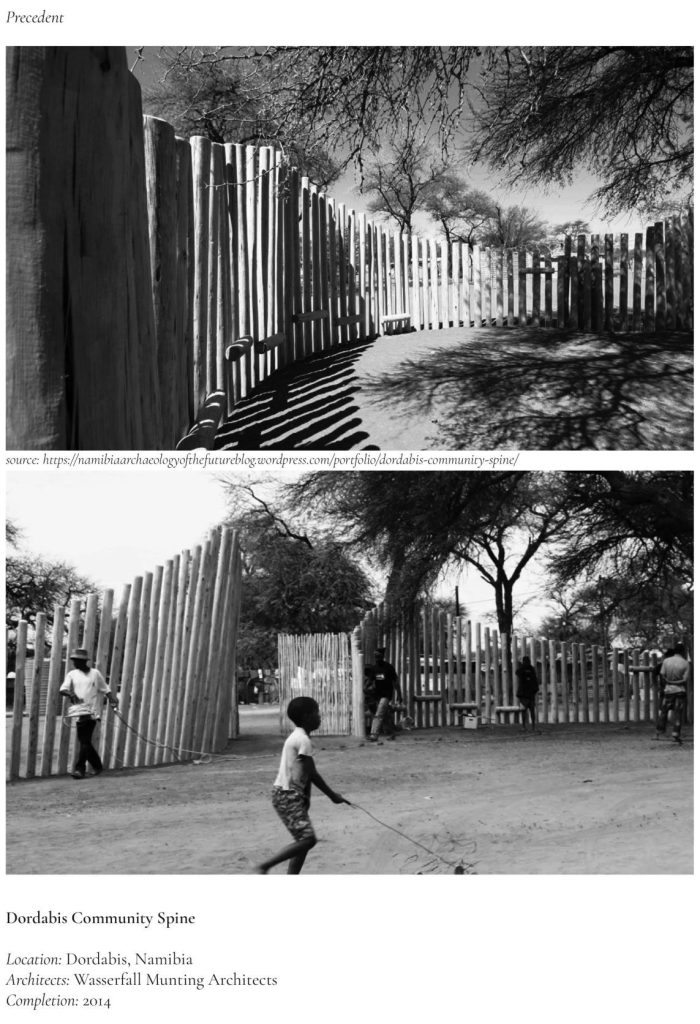
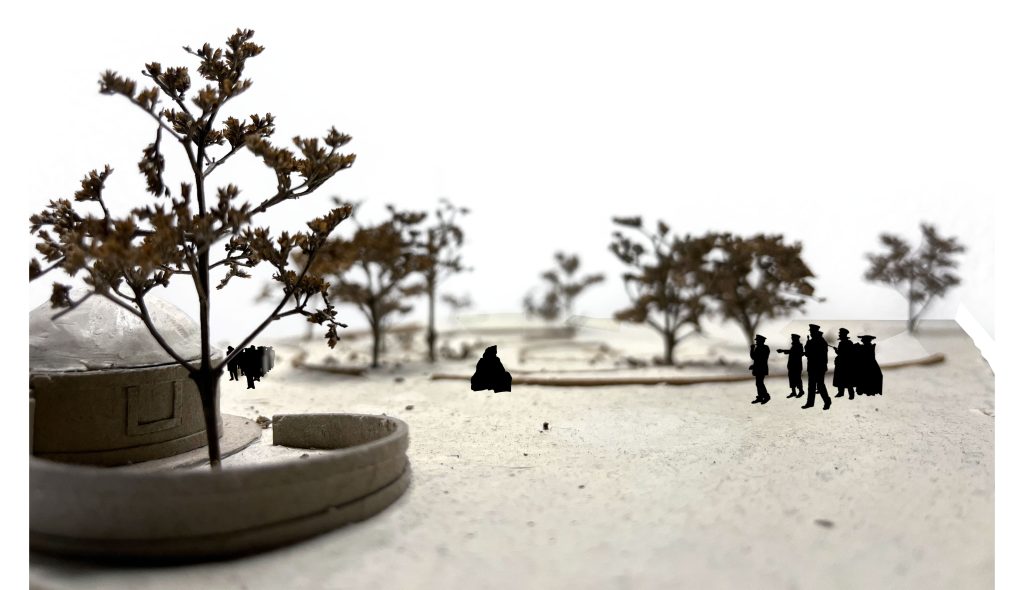
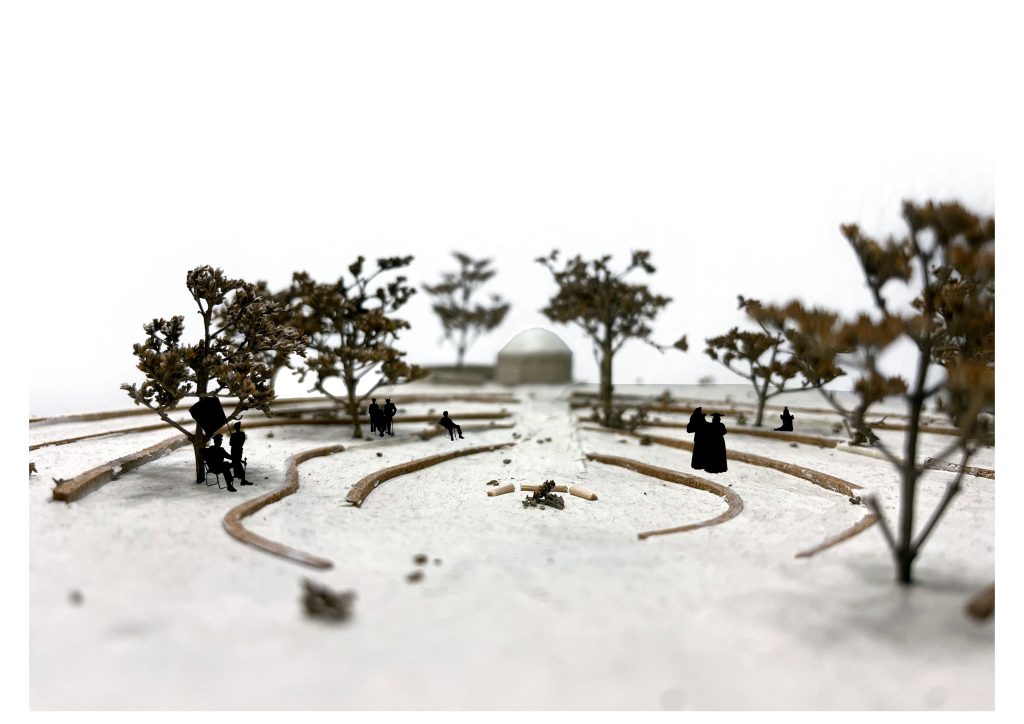
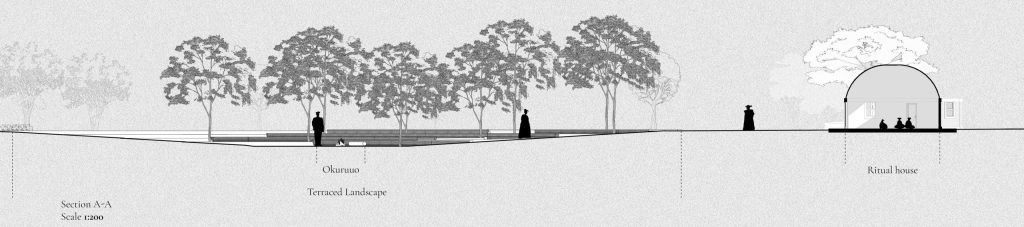
As Mbatata set out to collect information for his thesis, he encountered numerous challenges due to limited written accounts of history. An abundance of oral history was available from village elders and family recounting their experiences and providing valuable insights. The second semester arrived with its own obstacles—how would he use this newfound knowledge?
He started unraveling hidden narratives and rituals, attempting to understand their significance for both the people and the site itself. There was much more to be discovered about the location that even locals were unaware of. For example, during the genocide, Germans poisoned water sources in the Omaheke sandveld were the Ovaherero people had feld to after the battle of Hamakari. Mbatata began investigating indigenous knowledge and examining the importance of the vegetation around the site to the Ovaherero people. Thus, delving into the landscape’s secrets and retracing its history became the core of his research and thesis.
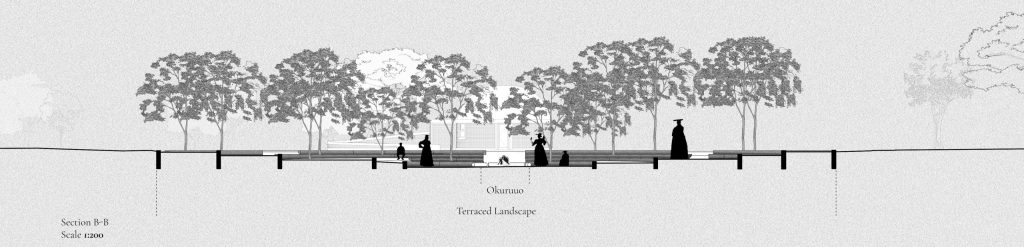
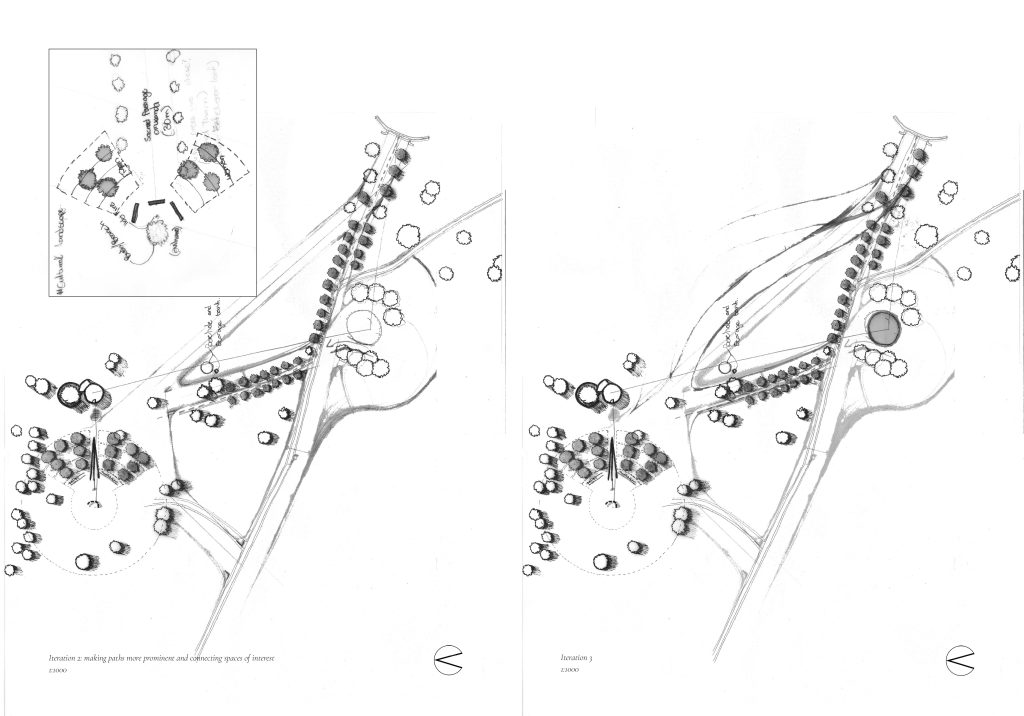
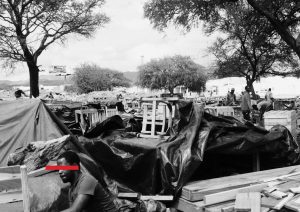
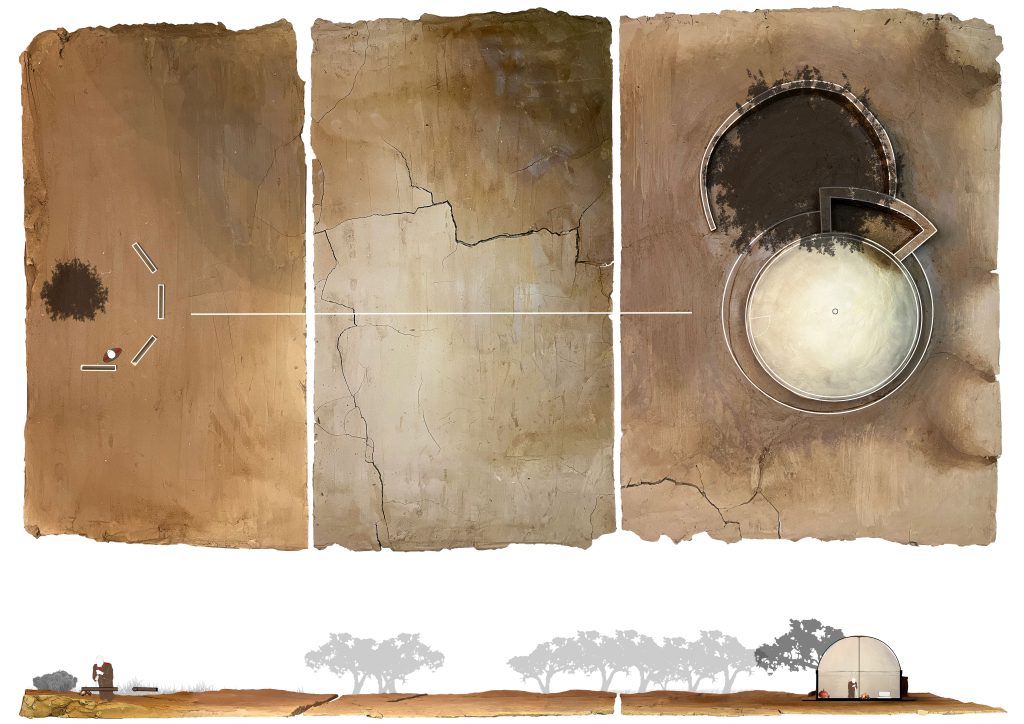
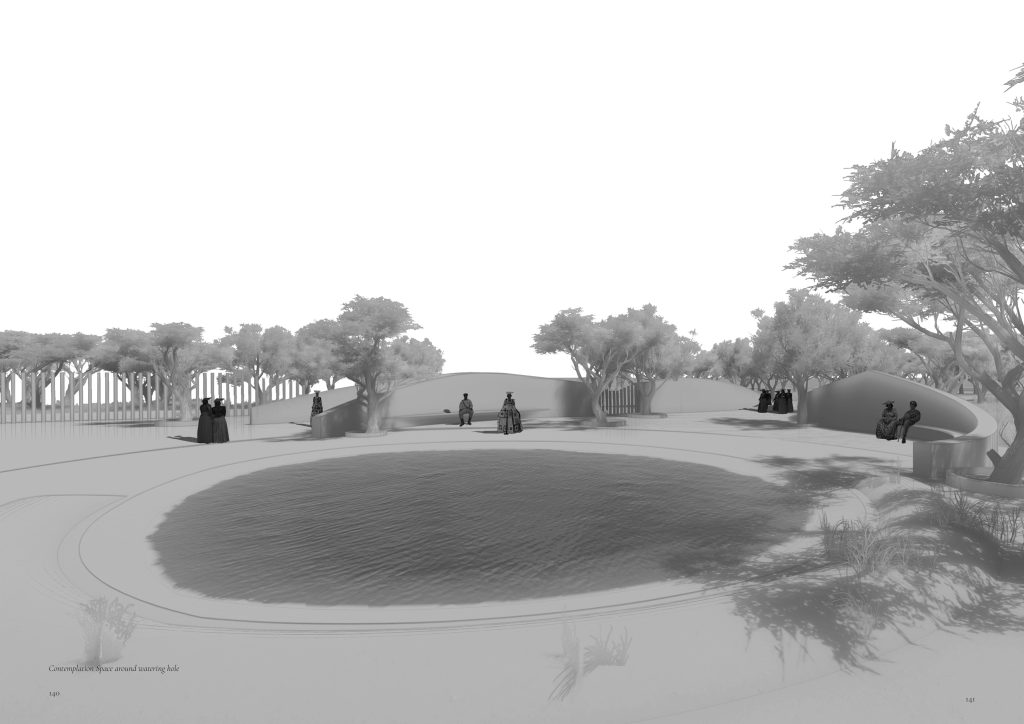
Mbatata carefully examined the execution of rituals and performances of the commemoration procession aiming to create a dedicated space for them. At present, a tent serves as temporary accommodation for the commemoration attendees. His vision was to design a more natural gathering area for these ceremonies. By observing the movement of people around the site, Mbatata allowed their interactions to guide his architectural decisions. He came up with the idea of carving an amphitheater into the earth, drawing inspiration from the symbolism of a watering hole. Additionally, he proposed that after the commemoration, attendees could descend to a sacred waterhole for a moment of reflection. The central goal of his design was to propose a landscape that portrayed a fuller narrative of the history of the site as well as encouraging a deeper contemplation and emphasis on the significance of the space’s identity.