

By Martin Namupala
Who is Martin?
In Goareagab, a young man lays the first bricks of his own home while still a high school student. Is there any way to do this better, he asked himself. This motivated him to pursue his architectural studies in tertiary education with vigor and purpose. As his roots pushed his mission beyond himself and the community, he transformed his academic life into one that is flourishing.He maintained a close working relationship with NAHG, the Shack Dwellers Federation, during his entire academic career.Working with residents of several Namibian townships gave him a wider perspective, allowing him to realize how his efforts not only affected the Goreagab community but also other communities in Namibia on a much wider scale He was the driving force behind the formation of the Department of Architecture and Spatial Sciences (DASP) Student association group to address the issues within the university department and social issues in the community. Influencing how professors communicate with and teach their students, as well as how future generations will learn to solve environmental problems in Namibia. Not only did this make him an excellent student, but it also equipped him with the necessary skills for his master’s. It encouraged him in the journey to identify his calling in the architectural sector. He is not suited for the conventional architecture sector. He is a statement bound for on the ground work.
The story of the Oshikango- Santa Clara Border
Project Location: Oshikango, Namibia
Year : 2021
University: Namibia University of Science and Technology
“What is a border?” This intriguing question initiated an exploration of the Oshikango-Santa Clara Border, an area rich in layers that have shaped these two vibrant towns over time. In pursuit of a deeper understanding, Martin dedicated his holiday to gathering as much information as possible while on site. Eventually narrowing it down into five main topics: History, Identity, Rupture, Economic, and Surveillance.
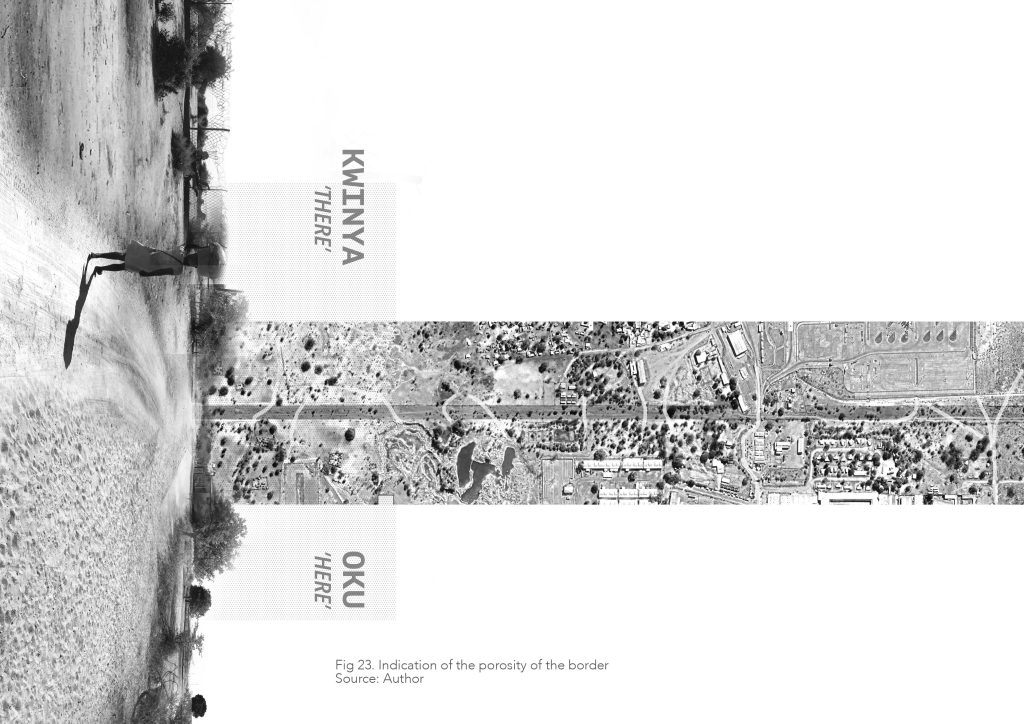
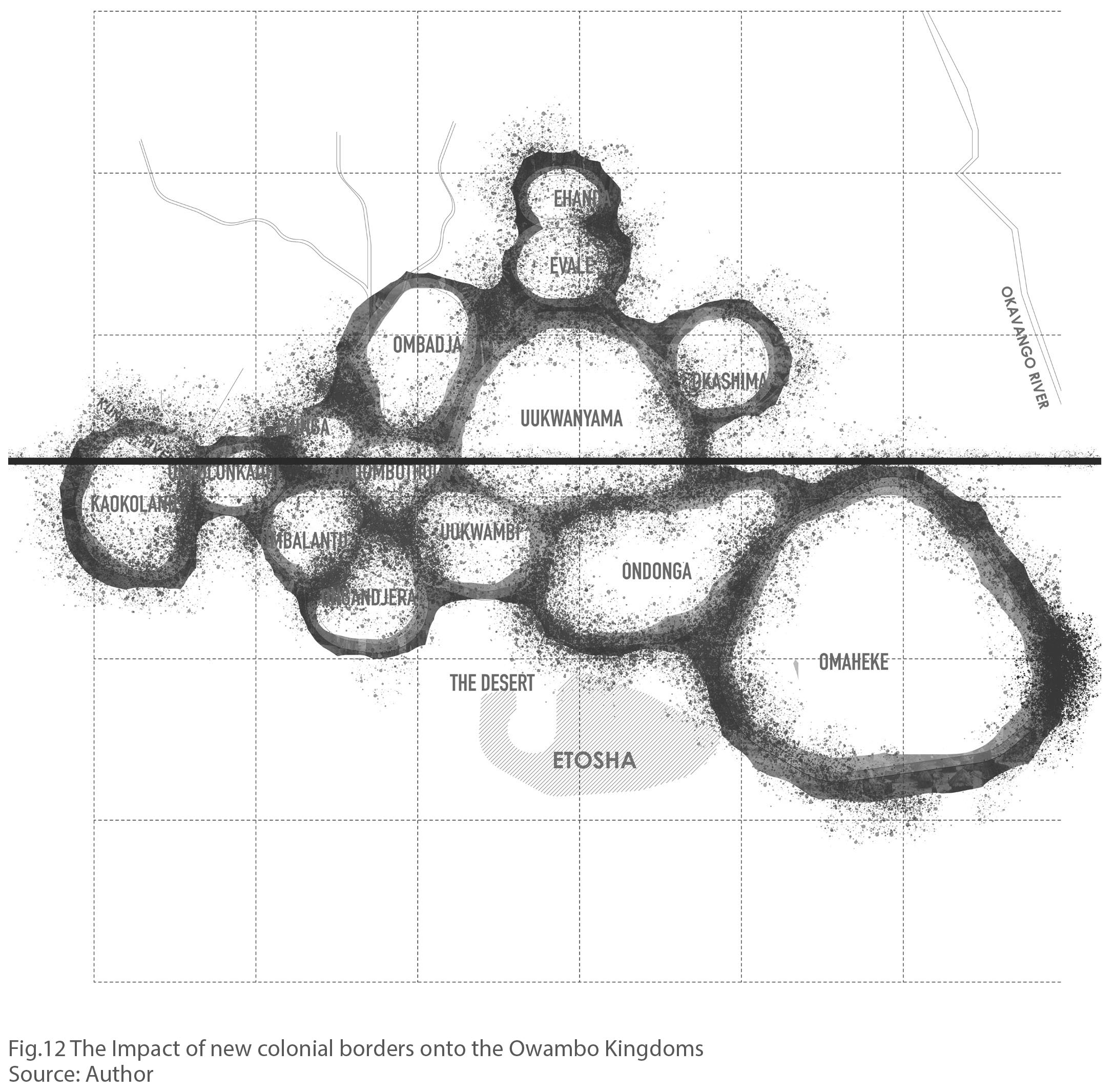
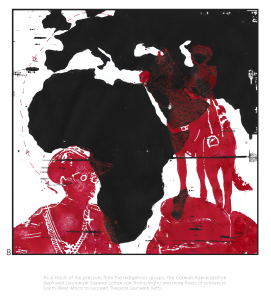
To comprehend the border’s unique nature, one must explore its history. The Ovakwanyama Kingdom was once whole but became fractured by opposing forces – the Portuguese on one side and the Germans on the other. The imposition of different systems, such as taxes and labour practices, led to disruption and adverse effects on both sides. Consequently, the Ovakwanyama people’s identity changed forever.
Those on Santa Clara’s side now face poverty and are deemed “Aambwela,” whereas their Namibian counterparts are seen as wealthier. As for urban development, Oshikango emerged first as a military post before transitioning into a trading hub. The emergence of an urban landscape transformed the border into an economic epicenter for exchanging goods and services.
Following Namibia’s independence, disparities in currencies endowed Angolans with considerable purchasing power, rendering Oshikango an attractive destination for trade. Stories of Oshikango’s potential growth filled countless newspaper pages.
However, when Angola’s economy crumbled in 2008, fortunes reversed; Namibians now held greater buying power, leading to increased policing of Angolan traders entering Namibia to sell goods. In turn, this reinforced the border as a potent legal institution marked by heightened surveillance on both sides, introducing “surveillance” as a critical topic in understanding the Oshikango-Santa Clara Border.
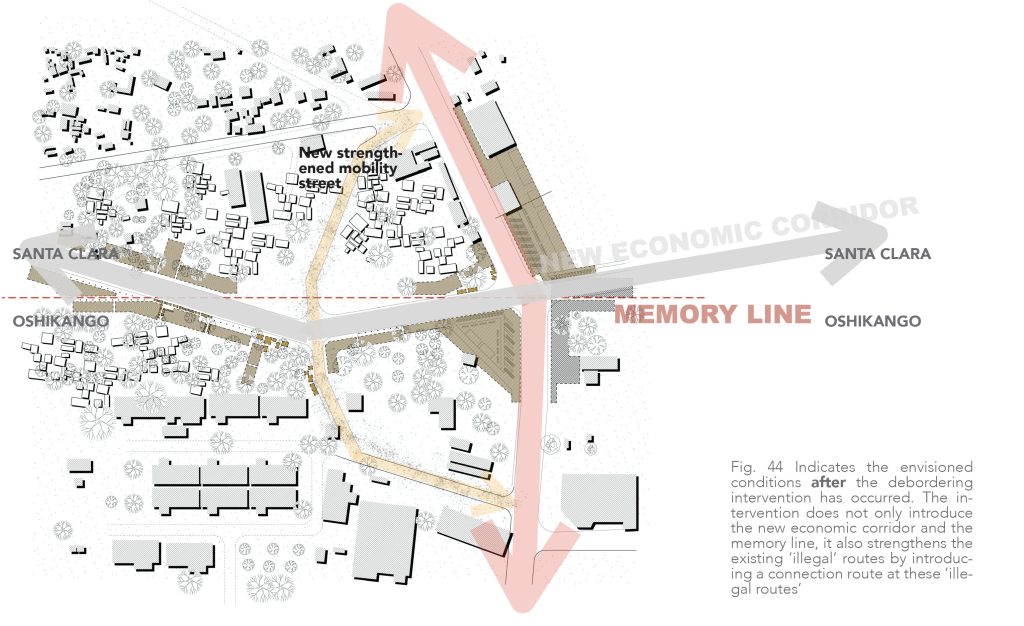
Upon studying Yara Sharif’s case study, Martin was inspired to reimagine borders by eliminating them entirely. This radical approach aimed at bridging the physical divide without any barriers, shedding light on the outdated colonial mindset. The concept of “DEbordering” emerged from this innovative idea.
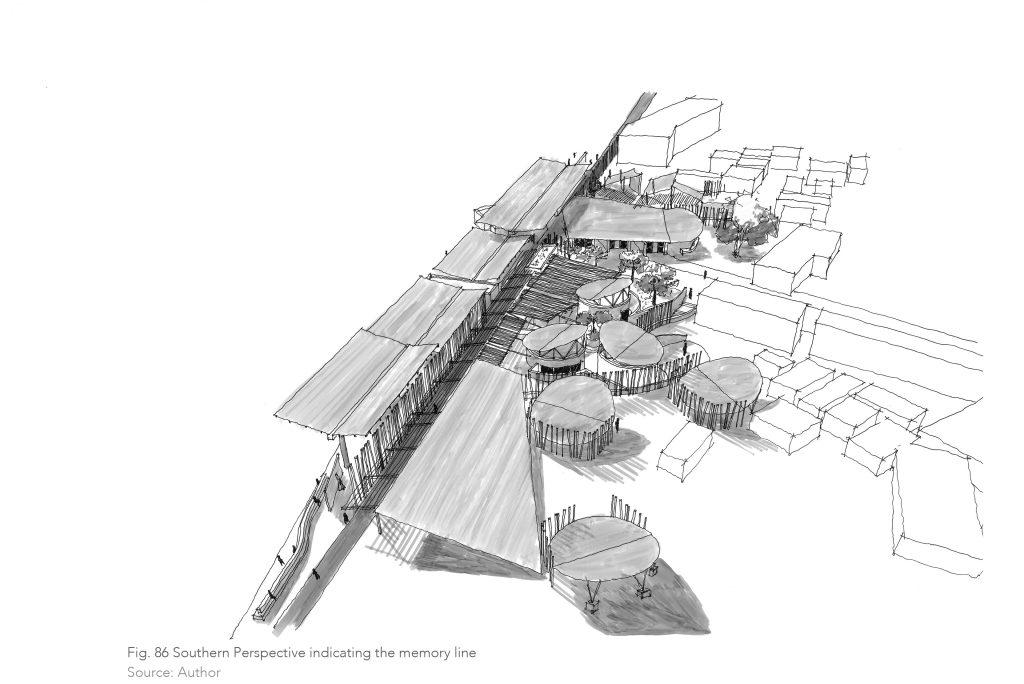
An urban design framework started taking shape as Martin utilized the B1 road and illegal pathways to seamlessly connect Namibia and Angola. He harnessed memory as a tool to craft spatial concepts, with the border’s current location in his design serving as a memory line. This line acts as an emblem to mark past spaces and acknowledge that historical disruptions cannot be erased. New memories now emerge along this path, shaping a meandering footprint that dances around history, intertwining Namibia and Angola in a unique pattern.
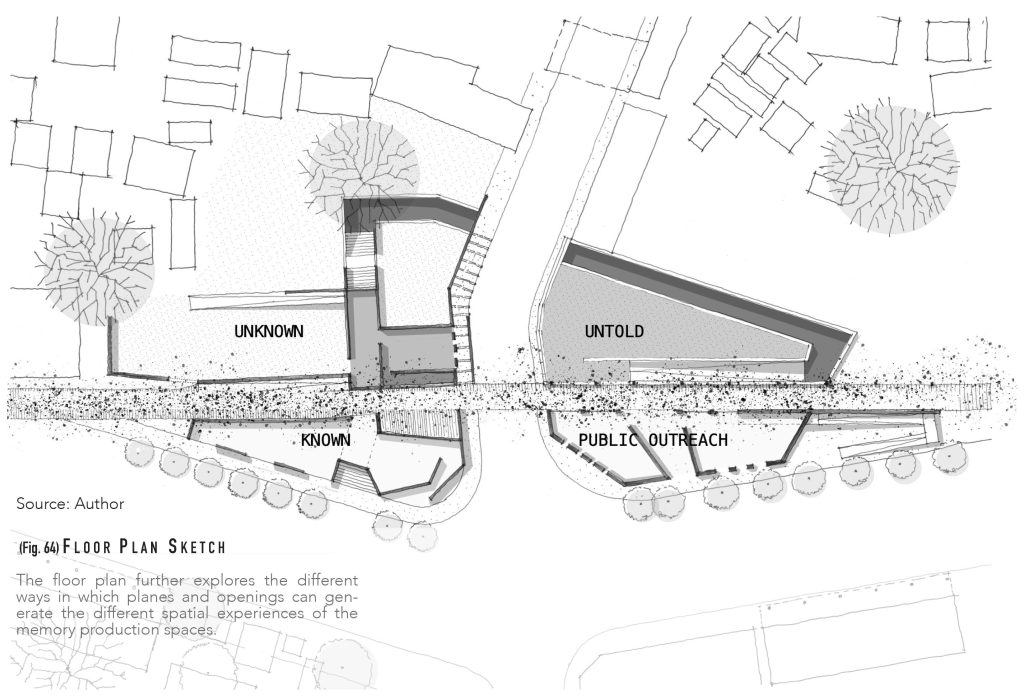
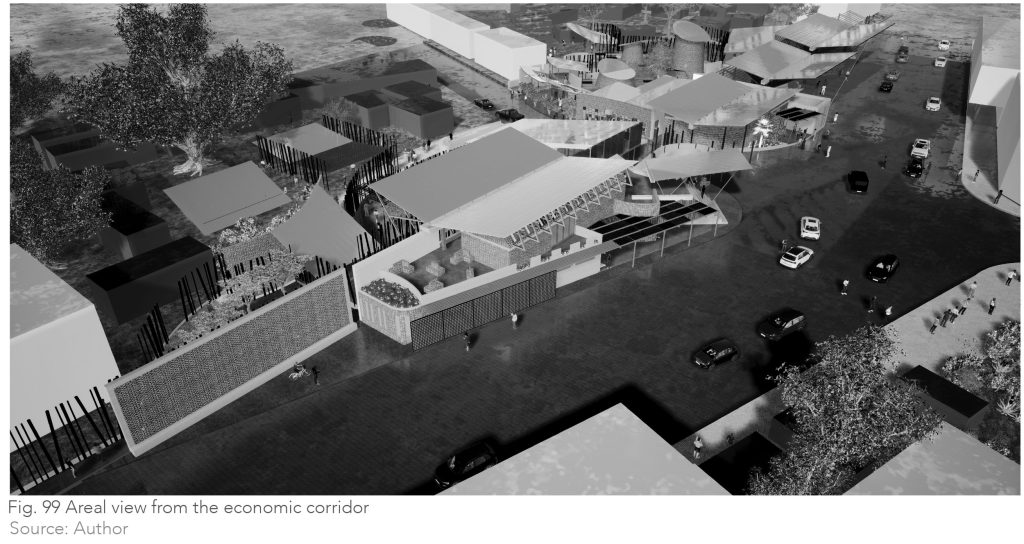
To create one expansive city, Martin focused on the horizontal axis, forming new areas of activity and intensity that would encourage unity. The architectural design site was strategically placed between the railway station and the old border post on the western side, establishing an institutional hub that would bring both countries closer together. This dynamic location anchors identity and history as key elements of architectural design.
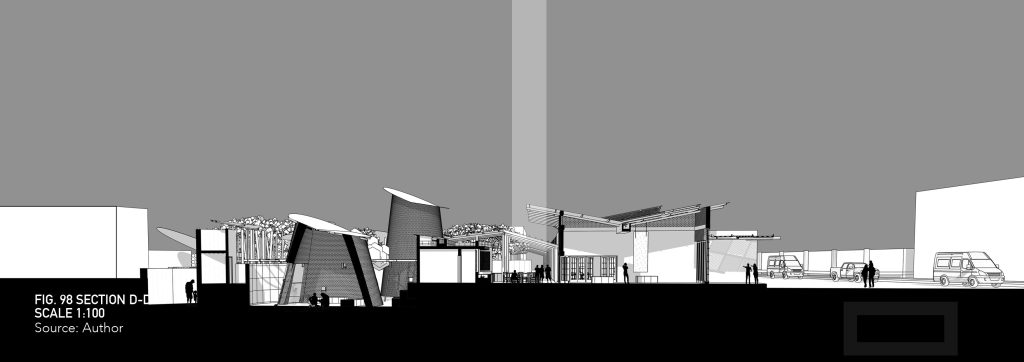
The space now hosts the Ovakwanyama traditional authority – those who were torn apart by the dividing line – representing healing, rehabilitation, and a return to ancestral customs. It facilitates storytelling of war experiences and serves as an educational center for learning about Ovakwanyama history. The library doubles as a haven for archives and narratives, complete with an exhibition area that showcases visions of the future for Ovakwanyama people. Artists are welcome to share their interpretations of past events and future possibilities.
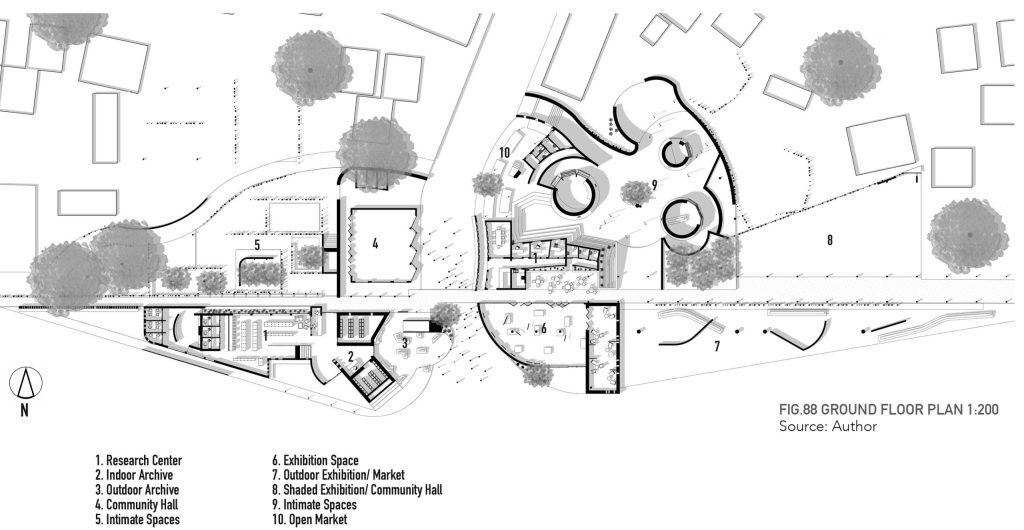
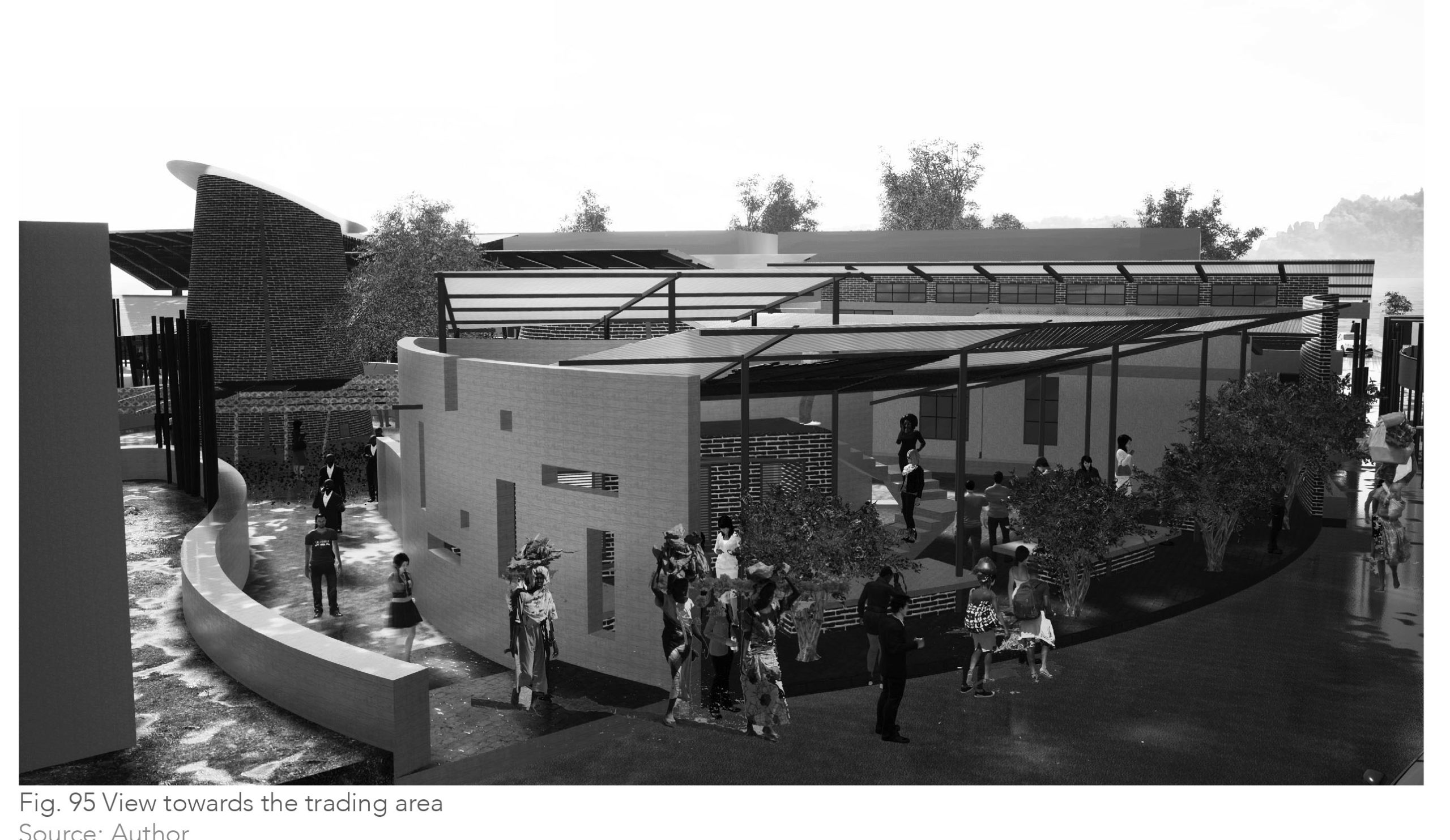
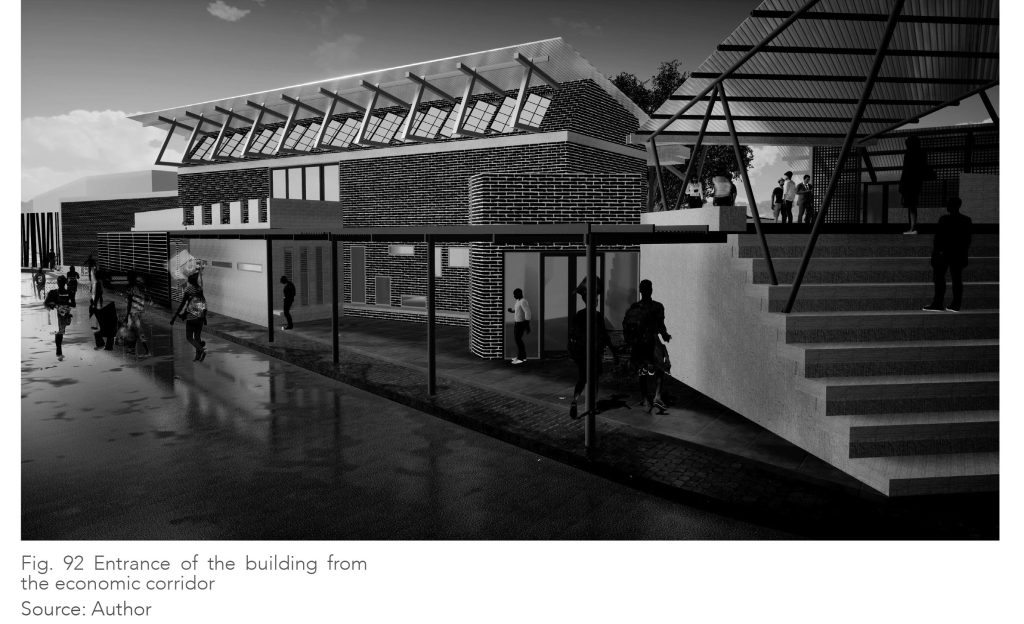
Emphasizing its purpose as a healing center, round rooms have been included where war veterans or those affected by conflict can openly discuss their experiences. A trading area connects directly with the streets outside, showcasing how identity, history, and economy influenced the creation of these functional and purposeful spaces situated along the memory line.
The building’s materiality reflects its surroundings and its vibrant structure aims to create a lively atmosphere. While the project doesn’t necessarily aim to reduce crime rates, it bridges spatial divides and
memories through a transparent design. The successful integration of these ideas truly brings the vision of DEbordering to life.

It’s very simple to find out any matter on web as compared to books, as I found this
paragraph at this web site.
I’ve been browsing online more than 4 hours today, yet I never found any interesting
article like yours. It is pretty worth enough for me.
In my opinion, if all website owners and bloggers made good content as
you did, the internet will be much more useful than ever before.